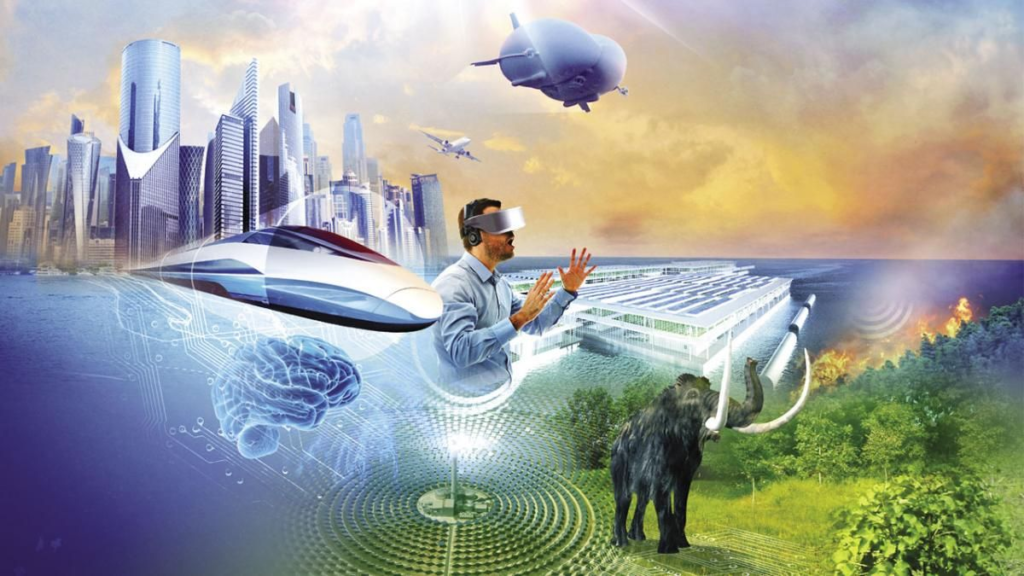
Introduction: What Is Future Technology?
Future technology refers to emerging innovations that are expected to transform how people live, work, communicate, and solve global challenges. From Artificial Intelligence (AI) and quantum computing to robotics, 5G/6G, and smart cities, future technology is creating a world where automation, connectivity, and intelligence become part of everyday life.
The pace of technological advancement has accelerated dramatically over the past decade. Businesses, governments, and individuals are investing in next-generation technologies to improve efficiency, reduce costs, and create better experiences. Understanding these innovations today helps us prepare for tomorrow.
Why Future Technology Matters
Technology influences every industry, from healthcare and education to finance and manufacturing.
Some key benefits include:
- Improved productivity
- Smarter decision-making
- Enhanced healthcare
- Sustainable energy solutions
- Safer transportation
- Better communication
Organizations that embrace innovation early often gain a significant competitive advantage.
Artificial Intelligence Will Continue to Lead Innovation
Artificial Intelligence is expected to remain the driving force behind future technology.
AI is already transforming industries by automating repetitive tasks, analyzing massive datasets, and assisting professionals in making informed decisions.
Applications of AI
- Virtual assistants
- Medical diagnosis
- Customer service chatbots
- Personalized education
- Fraud detection
- Autonomous vehicles
As AI continues to evolve, businesses will increasingly rely on intelligent systems to improve efficiency and innovation.
Comparison Table: Current Technology vs Future Technology
| Feature | Current Technology | Future Technology |
|---|---|---|
| Automation | Partial | Intelligent automation |
| Internet | 5G | 6G Connectivity |
| Computing | Cloud Computing | Quantum Computing |
| Transportation | Electric Vehicles | Autonomous Vehicles |
| Healthcare | Digital Records | AI-Powered Predictive Care |
| Manufacturing | Smart Factories | Fully Autonomous Production |
Quantum Computing: The Next Computing Revolution
Quantum computing has the potential to solve complex problems far beyond the capabilities of today’s computers.
Industries expected to benefit include:
- Healthcare
- Financial services
- Logistics
- Climate research
- Scientific discovery
Although still developing, quantum computers may revolutionize research and innovation in the coming years.
Smart Cities Powered by Technology
Future cities will become increasingly connected through digital infrastructure.
Features of Smart Cities
- Smart traffic systems
- AI-powered surveillance
- Intelligent waste management
- Renewable energy integration
- Smart water management
- Connected public transportation
These technologies aim to improve urban living while reducing environmental impact.
Robotics Will Transform Everyday Life
Modern robots are becoming smarter and more capable.
They are already used in:
- Manufacturing
- Warehousing
- Healthcare
- Agriculture
- Hospitality
- Space exploration
Future robots will work alongside humans rather than replacing them completely.
Personal Experience: The Value of Adopting New Technology
Humne dekha hai ke businesses jo naye digital tools ko jaldi adopt karte hain, woh operational efficiency mein noticeable improvement dekhte hain. Cloud software, AI automation, and digital collaboration tools have helped many organizations reduce manual work and improve customer service.
Our experience suggests that embracing innovation early often leads to long-term business growth.
Case Study: Manufacturing Through Automation
A medium-sized manufacturing company struggled with production delays.
After implementing:
- AI monitoring
- Robotic assembly
- Predictive maintenance
- Smart inventory systems
The business achieved:
- Faster production
- Lower maintenance costs
- Improved product quality
- Better employee productivity
This example shows how future technology can improve operational performance across industries.
Future of Healthcare Technology
Healthcare continues evolving through advanced digital solutions.
Emerging Healthcare Technologies
- AI-assisted diagnostics
- Wearable health monitors
- Robotic surgery
- Personalized medicine
- Telemedicine
- Remote patient monitoring
These innovations help doctors diagnose diseases earlier and improve patient outcomes.
Renewable Energy and Sustainable Technology
Future technology also focuses on protecting the environment.
Important innovations include:
- Solar energy improvements
- Smart electrical grids
- Green hydrogen
- Battery storage
- Carbon capture technology
Sustainable technologies aim to reduce emissions while meeting growing energy demands.
Autonomous Vehicles and Smart Transportation
Self-driving vehicles continue advancing through AI and sensor technology.
Benefits include:
- Fewer accidents
- Reduced traffic congestion
- Better fuel efficiency
- Improved mobility for elderly and disabled individuals
Although regulations are still evolving, autonomous transportation is expected to become increasingly common.
Internet of Things (IoT)
The Internet of Things connects everyday devices through the internet.
Examples include:
- Smart homes
- Connected factories
- Smart farming
- Wearable devices
- Industrial sensors
IoT enables devices to collect and share real-time information, improving efficiency and automation.
Future of Education
Technology is reshaping how students learn.
Modern educational tools include:
- AI tutors
- Virtual classrooms
- Augmented Reality learning
- Interactive simulations
- Personalized learning platforms
These technologies create engaging and flexible learning experiences.
Cybersecurity in the Future
As technology advances, cybersecurity becomes increasingly important.
Future security solutions will rely on:
- AI threat detection
- Zero Trust Architecture
- Biometric authentication
- Behavioral analytics
- Quantum-resistant encryption
Businesses must continue investing in security to protect sensitive information.
Challenges of Future Technology
Despite its advantages, future technology presents several challenges.
Privacy Concerns
Connected devices collect large amounts of personal information.
Ethical AI
Responsible AI development remains an important discussion.
Job Transformation
Automation may change certain job roles while creating new opportunities.
Digital Inequality
Access to advanced technology remains uneven across different regions.
Addressing these challenges will require cooperation between governments, businesses, educators, and technology leaders.
Expert Opinion on Future Technology
Expert ki rai yeh hai ke Artificial Intelligence, robotics, quantum computing, sustainable energy, and cybersecurity will define the next decade of innovation.
Rather than replacing people, future technology will enhance human capabilities by automating repetitive work and enabling professionals to focus on creativity, strategy, and problem-solving.
Continuous learning will become one of the most valuable skills in the digital economy.
How to Prepare for Future Technology
Individuals and businesses should:
- Learn AI fundamentals.
- Develop digital skills.
- Stay informed about technology trends.
- Invest in cybersecurity awareness.
- Adopt cloud-based tools.
- Encourage innovation within organizations.
Preparing today makes adapting to tomorrow’s technology much easier.
Read More: techupline
Pro Tip
Don’t wait until technology becomes mandatory. Start learning emerging technologies now, experiment with AI tools, improve your digital skills, and embrace continuous learning. Early adoption often creates better career opportunities and stronger business growth.
Frequently Asked Questions (FAQs)
What is future technology?
Future technology refers to emerging innovations such as Artificial Intelligence, robotics, quantum computing, smart cities, and advanced communication systems that will shape the future.
Which future technology will have the biggest impact?
Artificial Intelligence (AI) is expected to have the greatest impact because it influences healthcare, education, finance, manufacturing, and everyday life.
How will future technology affect jobs?
Technology will automate repetitive tasks while creating new careers in AI, cybersecurity, robotics, cloud computing, and digital engineering.
Why is cybersecurity important in future technology?
As digital systems become more connected, protecting personal and business data from cyber threats becomes increasingly essential.
How can I prepare for future technology?
Stay updated with technology trends, develop digital skills, learn AI basics, improve cybersecurity knowledge, and embrace lifelong learning to remain competitive in the future workforce.

![The Ultimate Guide to Choosing a [techypaper] Supplier in 2026](https://techupline.com/wp-content/uploads/2026/05/The-Ultimate-Guide-to-Choosing-a-techypaper-Supplier-in-2026-330x220.png)