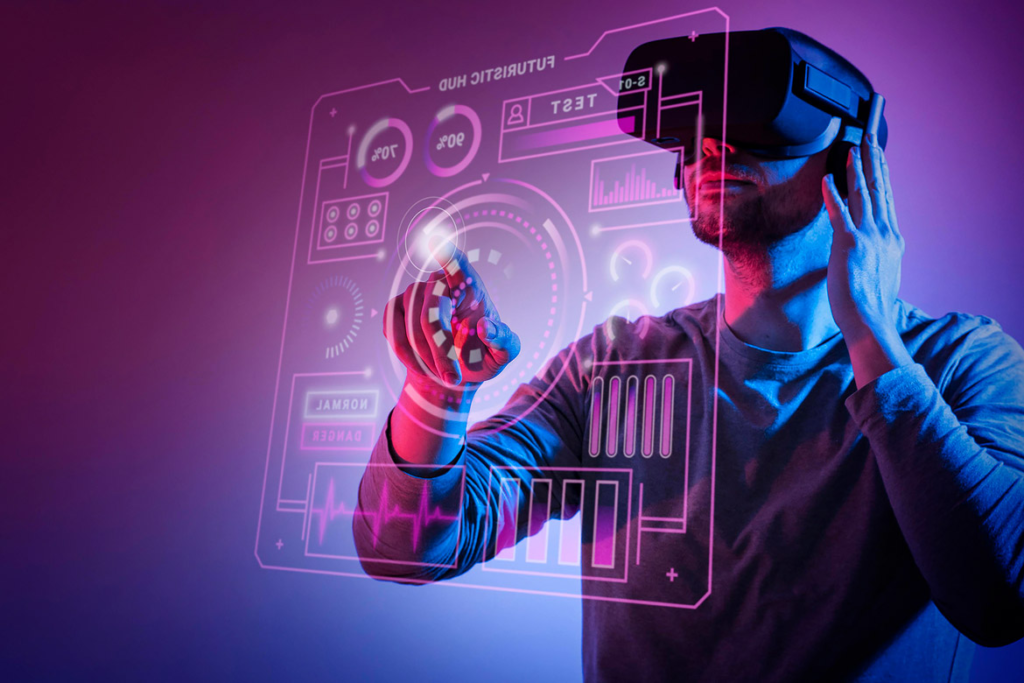
Next-generation technology refers to advanced and emerging technologies designed to transform how people, businesses, and industries operate. These technologies include artificial intelligence, quantum computing, advanced robotics, 5G and 6G connectivity, edge computing, extended reality, biotechnology, and autonomous systems. In 2026, next-generation technology is moving beyond experimentation and becoming increasingly practical, helping organizations improve efficiency, solve complex problems, and create new digital experiences.
What Is Next-Generation Technology?
Next-generation technology describes innovations that are expected to significantly improve or replace existing technologies. Unlike conventional technology, these solutions often combine multiple advanced capabilities to create smarter and more efficient systems.
For example, an autonomous vehicle may combine AI, computer vision, sensors, edge computing, GPS, and high-speed connectivity. Similarly, a smart factory can combine robotics, IoT sensors, cloud platforms, and AI analytics.
The goal is not simply to create newer technology but to develop systems that can perform tasks more intelligently, efficiently, and independently.
Major Types of Next-Generation Technology
Several technologies are shaping the next stage of digital transformation.
Artificial Intelligence
Artificial intelligence is one of the most influential next-generation technologies. Modern AI systems can analyze information, generate content, recognize patterns, understand natural language, and assist with complex tasks.
Businesses are using AI for:
- Customer support
- Software development
- Data analysis
- Marketing
- Fraud detection
- Automation
- Predictive analytics
AI is increasingly becoming an intelligent layer across existing software and business processes.
Quantum Computing
Quantum computing uses quantum-mechanical principles to process certain types of problems in fundamentally different ways from traditional computers.
Although large-scale practical quantum computing is still developing, it could eventually have applications in areas such as cryptography, drug discovery, materials science, optimization, and scientific research.
Advanced Robotics
Robotics is moving beyond traditional industrial machines. Modern robots can use AI, computer vision, sensors, and machine learning to operate in more complex environments.
Robots are being developed for manufacturing, logistics, healthcare, agriculture, exploration, and other specialized applications.
5G, 6G, and Advanced Connectivity
High-speed connectivity is an important foundation for next-generation technology.
5G enables faster communication, lower latency, and greater device connectivity. Research and development around 6G is exploring even more advanced communication capabilities.
Faster networks can support technologies such as autonomous systems, smart cities, industrial IoT, immersive experiences, and real-time remote applications.
Edge Computing
Edge computing processes data closer to where it is generated instead of sending everything to a distant cloud server.
This can reduce latency and improve responsiveness.
Why Edge Computing Matters
Edge computing can be particularly useful for applications that require rapid decisions, including:
- Autonomous vehicles
- Industrial automation
- Smart cameras
- Healthcare monitoring
- Robotics
- Smart infrastructure
For real-time systems, processing information closer to the source can provide significant technical advantages.
Extended Reality and Immersive Technology
Extended reality includes virtual reality, augmented reality, and mixed reality.
These technologies can create immersive digital experiences for gaming, education, training, healthcare, engineering, retail, and remote collaboration.
For example, companies can use virtual environments to train employees without exposing them to real-world operational risks.
Biotechnology and Digital Health
The combination of biotechnology, AI, sensors, and advanced computing is creating new possibilities in healthcare and life sciences.
AI can assist researchers in analyzing biological data, while wearable devices can continuously collect health-related measurements.
Humne dekha hai ke the most valuable healthcare applications often combine technology with professional expertise rather than attempting to remove humans from the process.
Next-Generation Technology in Business
Businesses are adopting emerging technologies to improve operations and create new products.
AI automation can handle repetitive tasks, while advanced analytics can help managers understand customers and market trends.
Cloud computing, edge computing, IoT, and AI can also work together to create intelligent business systems.
Example: Smart Manufacturing
A modern factory can use IoT sensors to collect machine data, edge computing to process information locally, AI to detect unusual patterns, and robotics to perform physical tasks.
This creates a connected production environment where machines and software continuously exchange information.
Next-Generation Technology Comparison
| Technology | Main Purpose | Potential Impact |
|---|---|---|
| Artificial Intelligence | Intelligent automation | Smarter decisions |
| Quantum Computing | Advanced computation | Complex problem solving |
| Robotics | Physical automation | Higher productivity |
| Edge Computing | Local data processing | Lower latency |
| 5G/6G | High-speed connectivity | Connected systems |
| Extended Reality | Immersive experiences | New interaction models |
| Biotechnology | Biological innovation | Advanced healthcare |
Benefits of Next-Generation Technology
Higher Efficiency
Automation and intelligent systems can complete repetitive tasks faster and consistently.
Businesses can use these technologies to reduce unnecessary manual work and improve operational efficiency.
Better Decision-Making
AI and advanced analytics can process large volumes of information and identify patterns that humans may overlook.
This can help organizations make more informed decisions.
New Business Opportunities
Emerging technologies can create entirely new products, services, and business models.
Companies that understand these technologies early may identify opportunities before they become mainstream.
Improved User Experiences
AI-powered personalization, immersive interfaces, connected devices, and intelligent assistants can create more responsive digital experiences.
Challenges and Risks
Next-generation technology also introduces significant challenges.
Organizations must consider cybersecurity, privacy, cost, regulation, ethical concerns, technical complexity, and workforce skills.
AI systems may produce incorrect information, connected devices can introduce security vulnerabilities, and emerging technologies may require substantial infrastructure investments.
Expert ki rai yeh hai that companies should evaluate both the potential benefits and risks before implementing any emerging technology.
Real-World Case Study: Intelligent Logistics
Consider a logistics company managing thousands of deliveries.
Traditional systems may rely heavily on fixed routes and manual monitoring. A next-generation system could combine AI, GPS, IoT sensors, and cloud analytics to optimize routes and monitor shipments.
AI could identify changing traffic patterns, while sensors provide real-time information about vehicles and packages.
The result can be a more responsive logistics operation with better visibility and potentially lower operational costs.
How to Prepare for Next-Generation Technology
Businesses do not need to adopt every emerging technology immediately.
A better approach is to:
- Identify important business problems.
- Research technologies that could solve them.
- Start with a small pilot project.
- Measure performance and return on investment.
- Train employees.
- Improve cybersecurity.
- Scale successful solutions gradually.
This strategy reduces unnecessary spending and allows organizations to learn before making large investments.
The Future of Next-Generation Technology
The future will likely involve greater convergence between different technologies.
Instead of operating independently, AI, robotics, IoT, edge computing, advanced connectivity, and quantum technologies may increasingly work together.
AI could provide intelligence, IoT could provide data, edge computing could enable rapid processing, and robotics could perform physical actions.
This convergence could lead to more autonomous and intelligent systems across industries.
Read More: techupline
Pro-Tip: Focus on Practical Value
Do not adopt emerging technology simply because it is trending.
Start with a real problem and determine whether a new technology can provide measurable value.
The strongest technology strategy combines innovation with practical goals, security, employee training, and long-term scalability.
Frequently Asked Questions
What is next-generation technology?
Next-generation technology refers to emerging and advanced technologies that have the potential to significantly improve existing systems or create new ways of solving problems.
What are examples of next-generation technology?
Examples include AI, quantum computing, advanced robotics, edge computing, 5G and 6G, extended reality, biotechnology, and autonomous systems.
Why is next-generation technology important?
It can improve efficiency, enable automation, create new products and services, enhance decision-making, and solve problems that are difficult to address with traditional technologies.
How will next-generation technology affect businesses?
Businesses can use emerging technologies to automate operations, improve customer experiences, analyze data, reduce costs, and develop innovative products.
What is the biggest challenge of next-generation technology?
Major challenges include cost, cybersecurity, privacy, regulation, ethical concerns, technical complexity, and the shortage of skilled professionals.

![The Ultimate Guide to Choosing a [techypaper] Supplier in 2026](https://techupline.com/wp-content/uploads/2026/05/The-Ultimate-Guide-to-Choosing-a-techypaper-Supplier-in-2026-330x220.png)