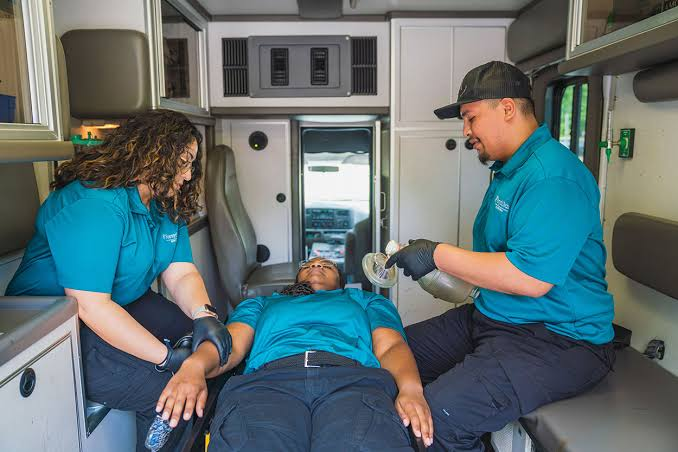
EMS at Forsyth Tech refers to the Emergency Medical Services (EMS) education and training programs offered by Forsyth Technical Community College. These programs prepare students for careers as Emergency Medical Technicians (EMTs), Advanced EMTs, and Paramedics by combining classroom instruction, hands-on laboratory training, clinical experience, and real-world field practice. Whether you’re starting a career in emergency healthcare or advancing your current EMS credentials, Forsyth Tech provides a structured pathway toward certification and employment.
Introduction
Emergency Medical Services professionals are often the first healthcare providers to respond during accidents, medical emergencies, and disasters. Their ability to deliver immediate care can significantly improve patient outcomes before arrival at a hospital.
EMS Forsyth Tech is designed to equip students with the medical knowledge, technical skills, and professional confidence needed to perform effectively in high-pressure environments. The curriculum emphasizes practical learning, teamwork, communication, and patient-centered care.
What Is EMS at Forsyth Tech?
The EMS program focuses on preparing students for careers in pre-hospital emergency medicine.
Students learn to:
- Assess emergency situations
- Perform life-saving interventions
- Administer emergency care
- Operate medical equipment
- Communicate with healthcare teams
- Transport patients safely
The training combines classroom education with laboratory simulations and supervised clinical experiences.
Why Choose an EMS Program?
A structured EMS education helps students develop both technical and interpersonal skills required for emergency response.
Benefits include:
- Hands-on medical training
- Career-focused curriculum
- Clinical experience
- Team-based learning
- Opportunities for certification
- High-demand healthcare profession
- Continuous professional growth
Many students choose EMS because it offers meaningful work that directly impacts people’s lives.
EMS Career Pathways
Graduates may pursue various roles in emergency healthcare.
Common career options include:
Emergency Medical Technician (EMT)
EMTs provide basic emergency medical care and patient transportation.
Responsibilities include:
- Patient assessment
- CPR
- Oxygen administration
- Bleeding control
- Splinting injuries
Advanced EMT
Advanced EMTs perform additional medical procedures beyond the EMT level.
These may include:
- Intravenous therapy
- Advanced airway management
- Medication administration
Paramedic
Paramedics receive advanced education allowing them to perform more complex medical procedures.
Their responsibilities often include:
- Cardiac monitoring
- Advanced life support
- Medication management
- Trauma care
- Emergency decision-making
Comparison Table
| EMS Level | Training Focus | Typical Responsibilities |
|---|---|---|
| EMT | Basic emergency care | Patient assessment and transport |
| Advanced EMT | Intermediate medical procedures | IV therapy and additional treatments |
| Paramedic | Advanced life support | Critical emergency care and advanced interventions |
Skills Students Develop
EMS education emphasizes both technical expertise and professional behavior.
Key skills include:
- Patient assessment
- Emergency decision-making
- CPR
- Trauma management
- Airway management
- Communication
- Teamwork
- Critical thinking
- Stress management
- Medical documentation
These skills prepare graduates for demanding emergency situations.
Hands-On Training
Practical experience plays an essential role in EMS education.
Students typically participate in:
Laboratory Simulations
Simulation labs recreate realistic emergency scenarios where students practice patient care using medical equipment and training manikins.
Clinical Rotations
Clinical experiences expose students to hospitals, emergency departments, and healthcare professionals.
These rotations strengthen both technical competence and confidence.
Field Experience
Field internships allow students to work alongside experienced EMS professionals during emergency responses.
This real-world exposure bridges classroom learning with practical application.
Personal Experience
From observing healthcare training programs, we have found that students gain the most confidence during simulation exercises and supervised field experiences. Reading textbooks provides important knowledge, but repeated hands-on practice helps develop quick decision-making skills required during emergencies.
Many successful EMS professionals credit practical training as one of the most valuable parts of their education.
Case Study
A student entering an EMS program had no previous medical background but was passionate about helping others.
Throughout the program, the student completed:
- Classroom instruction
- CPR certification
- Clinical rotations
- Ambulance ride-alongs
- Patient simulations
By graduation, the student demonstrated improved communication, faster clinical decision-making, and greater confidence during emergency scenarios.
This illustrates how structured EMS education transforms beginners into capable healthcare professionals.
Essential Equipment Used During Training
Students become familiar with numerous medical tools.
Common equipment includes:
- Automated External Defibrillators (AEDs)
- Oxygen delivery systems
- Stretchers
- Spine boards
- Trauma kits
- Cardiac monitors
- Airway devices
- Blood pressure monitors
Learning proper equipment use is essential for safe patient care.
Career Opportunities After Graduation
EMS graduates may find employment in various settings.
Potential workplaces include:
- Ambulance services
- Hospitals
- Fire departments
- Emergency response agencies
- Industrial safety teams
- Event medical services
- Government emergency organizations
Growing demand for emergency healthcare professionals continues creating career opportunities.
Qualities of Successful EMS Professionals
Beyond technical knowledge, successful EMS providers often possess:
- Compassion
- Emotional resilience
- Physical fitness
- Strong communication
- Leadership
- Adaptability
- Integrity
- Professionalism
These personal qualities contribute to better patient care and effective teamwork.
Read More: techupline
Continuing Education
Healthcare constantly evolves.
EMS professionals often pursue continuing education to:
- Maintain certifications
- Learn updated treatment guidelines
- Improve clinical skills
- Advance into leadership roles
- Specialize in critical care or community paramedicine
Lifelong learning remains an important part of every EMS career.
Expert Opinion
Emergency medicine educators consistently emphasize that technical skills alone are not enough. The best EMS professionals combine clinical competence with calm decision-making, empathy, teamwork, and clear communication.
Students who actively participate in simulations, ask questions, and practice regularly often develop stronger clinical confidence before entering the workforce.
Pro Tip
If you’re considering EMS as a career, focus equally on communication skills and medical knowledge. Patients remember how they were treated emotionally just as much as the medical care they received. Strong teamwork, compassion, and continuous practice are key to long-term success.
Frequently Asked Questions
What is EMS at Forsyth Tech?
EMS at Forsyth Tech is an emergency medical education program that prepares students for careers as EMTs, Advanced EMTs, and Paramedics through classroom instruction, laboratory practice, clinical experiences, and field training.
What careers can graduates pursue?
Graduates may work as Emergency Medical Technicians, Advanced EMTs, Paramedics, ambulance professionals, hospital emergency staff, or emergency response personnel.
Does the program include hands-on training?
Yes. Students typically complete laboratory simulations, clinical rotations, and supervised field experiences that provide practical emergency medical training.
What skills are taught in EMS training?
Students learn patient assessment, CPR, trauma care, airway management, emergency communication, teamwork, medical documentation, and critical thinking.
Is EMS a good healthcare career?
Yes. EMS offers meaningful work, strong job demand, opportunities for career advancement, and the ability to make a direct difference during medical emergencies.

![The Ultimate Guide to Choosing a [techypaper] Supplier in 2026](https://techupline.com/wp-content/uploads/2026/05/The-Ultimate-Guide-to-Choosing-a-techypaper-Supplier-in-2026-330x220.png)